
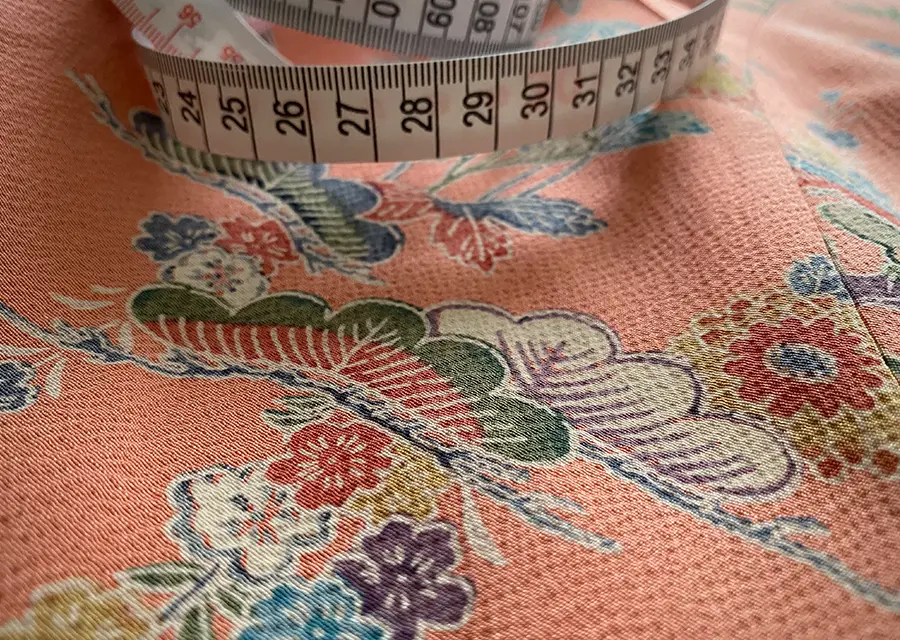

Fashion as Memory, Fashion as Feeling
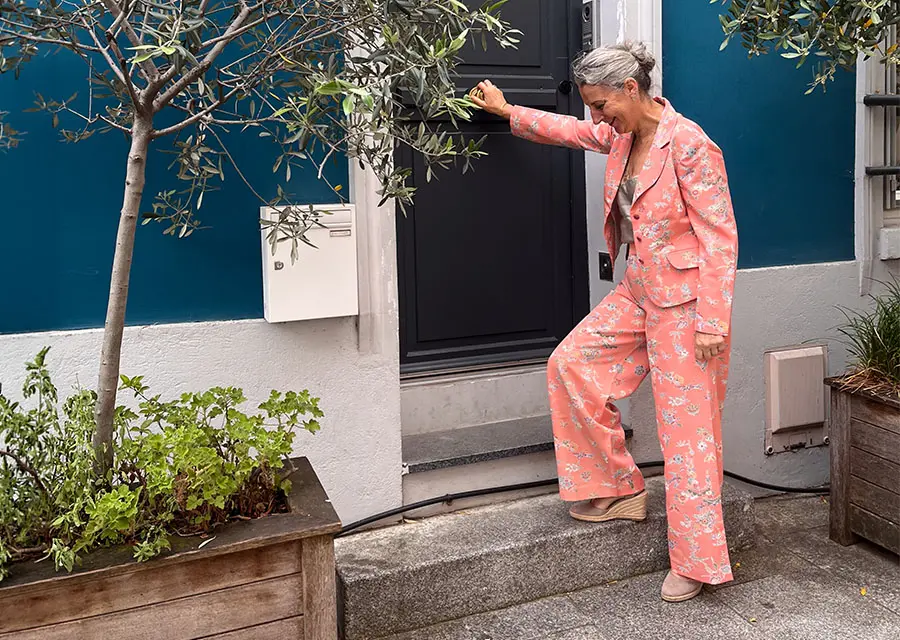
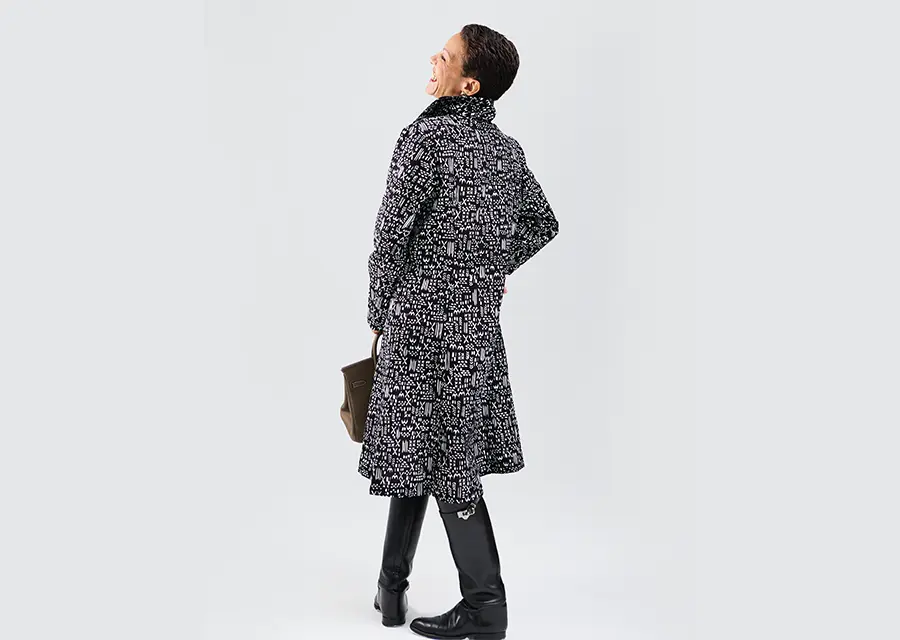
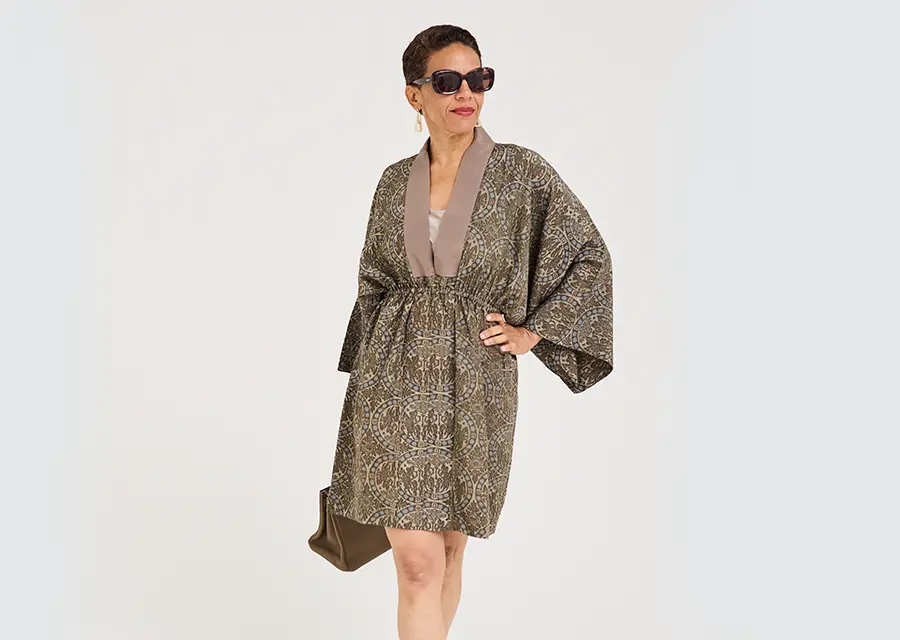
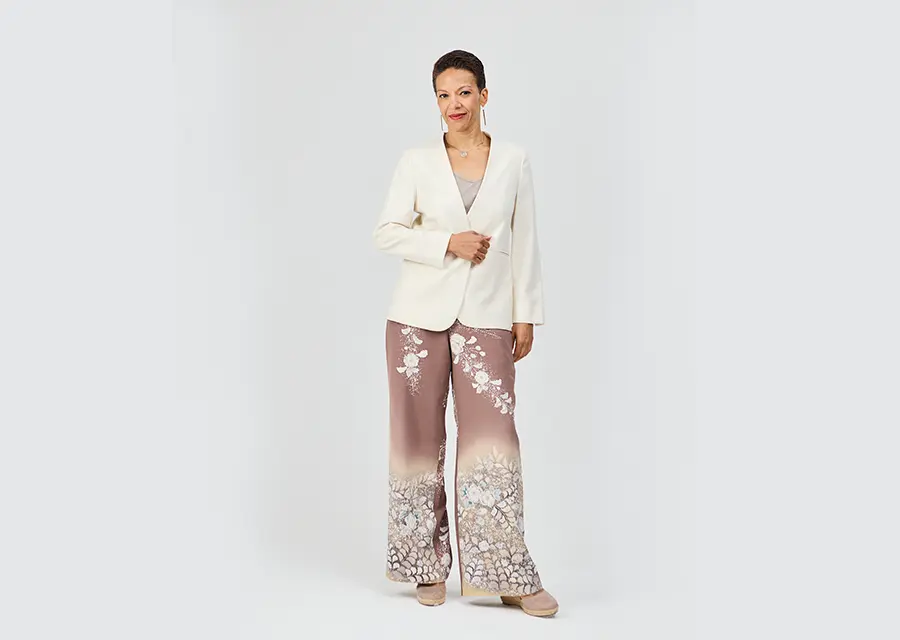
Bespoke garments born of antique kimono
A kimono is handed down through the generations, from woman to woman,
carrying memory and tenderness with it.
We wanted to continue that gesture, in another form.
Imagine the quiet pleasure of giving new life to a kimono you love,
of watching a Japanese story begin again, made to your measure and worn with pride. By you.
Every piece we make is one of a kind:
it carries the hand of the artisan who made it,
and it will keep travelling at your side.
Kimonogatari is the art of passing things on, made joyful.
We bring two women together: the one who treasured her kimono in Japan,
and you, who will write its next chapter.
It is also where tradition meets the present,
brought together by respect and imagination.
These silks have crossed generations. We give them the next one.
Our pieces are made to belong in your life,
on ordinary days and on the brightest occasions alike,
while staying true to the spirit of tradition:
bespoke garments with a clean, unhurried line that falls just right,
made by artisans who know how to honour these rare and irreplaceable cloths.
Our Vision
To keep the spirit of tradition alive, and to shape what comes next.
Kimonogatari is about building bridges—between cultures, between generations, between what was and what will be. It rests on a simple belief: that fashion can carry meaning, memory, and feeling.
Our Mission
To carry these silken stories from Japan to the West; to make pieces that reflect who you are; and to build, together, a world in which every garment has a soul, and holds tradition and the present as one.
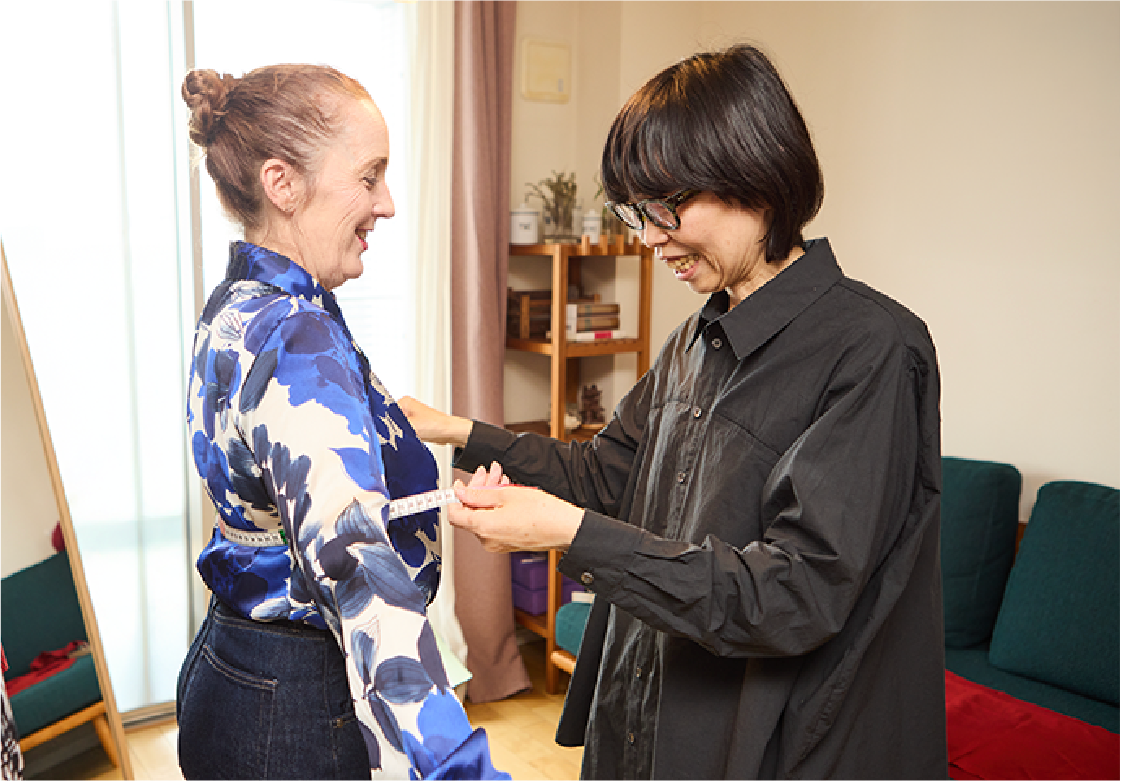
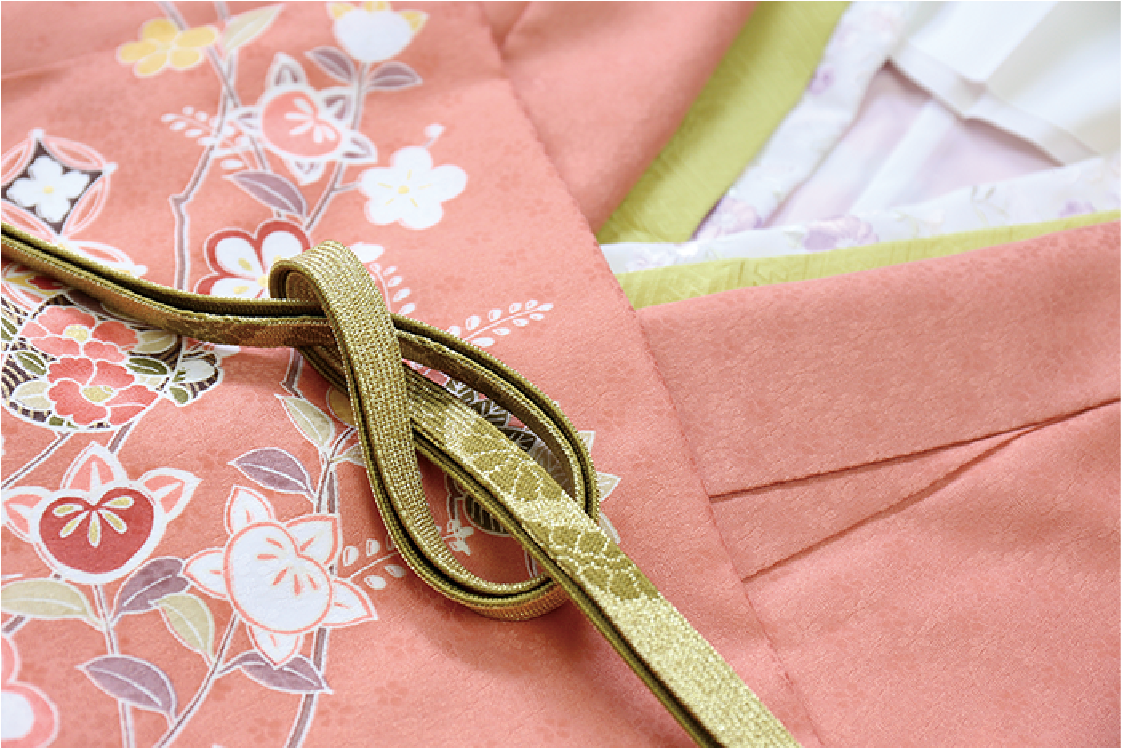
The journey of your kimono
Every piece is made with care in Japan.
Several artisans bring their gifts together to create your garment.
True to Japanese tradition, Kimonogatari draws on many hands and many skills, so that each garment becomes a genuine work of art.
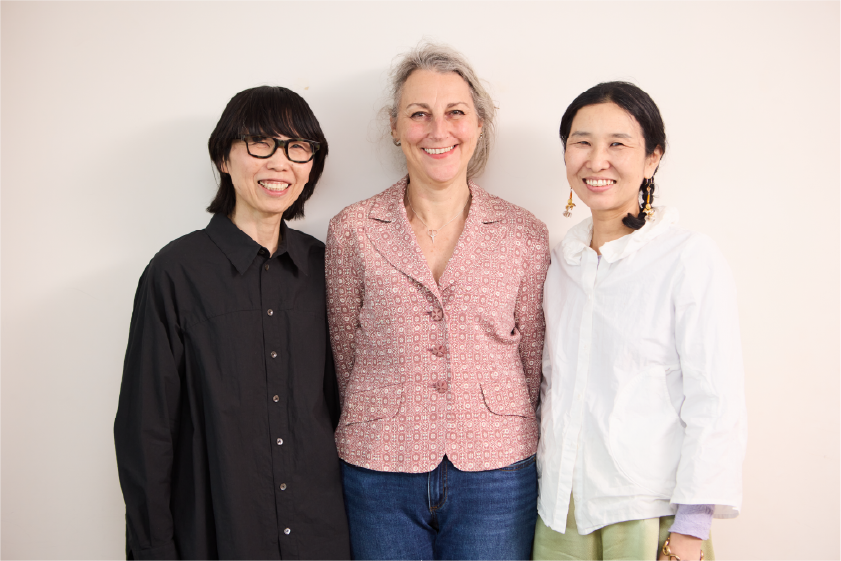
One atelier, three visions
-
Claire <Center>
Founder of Kimonogatari. Graduate in Japanese philology and in business,
with a PhD in digital humanities.It began, as these things do, with an encounter.
In 1988, a year in Tokyo that was meant to be a brief interlude became the thread running through a whole life.
What held her was a value lived out day by day: solidarity.
Friends who became family, who took her in without hesitation and taught her that the bond comes before everything else.Claire built her entire career in Japan,
her home now for more than twenty years.
The kimono came to hold that whole journey in a single object.
It became something to create with the day she chose to weave her own inheritance into it:
her mother's needle, her father's geometry.Since 2015, she has been turning antique kimono into Western dress,
keeping alive that same gesture of encounter—between two cultures,
between a cloth and a woman, between a past and the passing on of it. -
Yoko <Right>
Yoko Arai is the founder and fashion designer of Eatable of Many Orders / EATABLE.
After earning a BFA in Fashion Design from OTIS College of Art and Design in Los Angeles,
she worked with Bernhard Willhelm in Antwerp and Paris, and trained at a leather atelier in Barcelona.
After returning to Japan, she founded Eatable of Many Orders / EATABLE with Koji Arai.
Based in Atami, a seaside town about an hour from Tokyo, she continues her creative work.Her work explores the stories held within materials,
bringing together craftsmanship, nature, and contemporary design.
Through KIMONOGATARI, she tries to discover new possibilities
for kimono textiles and Japanese craftsmanship. -
Makiko <Left>
A resident of Kyoto. Once a pattern maker in the world of fashion,
she now works to her own account.For many years Makiko practised as a pattern maker,
giving shape to the making of garments; then she chose to go her own way, in independence.From that calling she kept what mattered most:
a keenness of observation and an exacting eye for beauty,
cultivated patiently over years of craft.
It was upon that gaze that she drew when she took up her studies once more,
earning her degree from the arts faculty of Kyoto University of the Arts,
through its distance-learning programme.There, she deepened her understanding of the art and culture of Japan.
The way of tea carried that pursuit further still.
Through chanoyu, held to be the total art of Japanese culture,
and through the kimono, Makiko came to know a sensibility, and a spirit of making, particular to Japan :
a way of being in which intention lives inside every gesture.What she is still after, to this day, is exactly that:
the craft and the spirit held within the work of the hand,
the beauty of a thing made by a person, that sensibility so wholly Japanese.
She sees it with an eye that is hers alone.
A glimpse of our creations
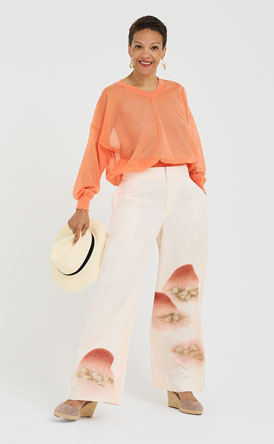
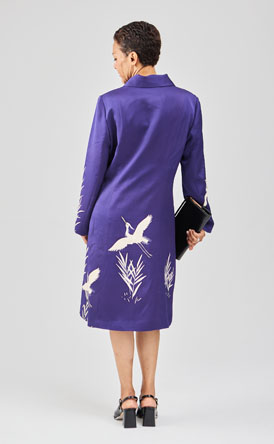
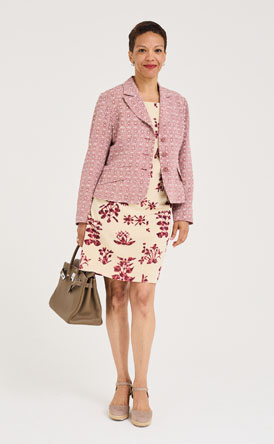
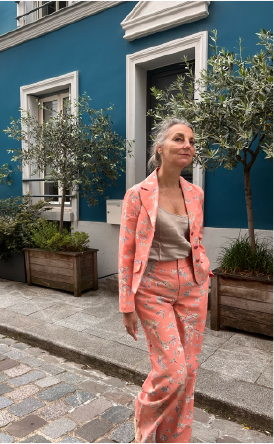
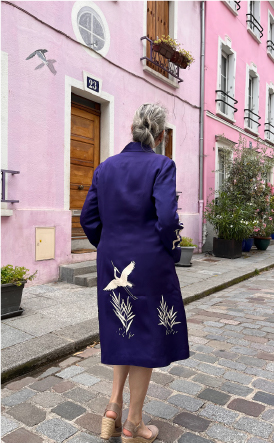
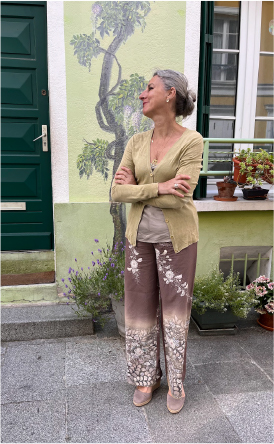
Our heartfelt thanks to Atelier Shinji and Pura Firenze for their invaluable collaboration.
https://www.instagram.com/atelier_shinji_ginza/
https://www.instagram.com/pura_firenze/